UGC examples by ad format, with hooks you can adapt
 0:24
 0:31
 0:18
These UGC examples describe the structures that paid social ads made by creators tend to follow, format by format, with the opening hook, the beats, the shots and the call to action. They are written for performance marketers and agencies who need to brief creators quickly for Meta, TikTok, YouTube Shorts and Amazon. Every hook line here is a generic pattern you can adapt to your own product, not a copy of any brand's ad.
These UGC examples describe the structures that paid social ads made by creators tend to follow, format by format, with the opening hook, the beats, the shots and the call to action. They are written for performance marketers and agencies who need to brief creators quickly for Meta, TikTok, YouTube Shorts and Amazon. Every hook line here is a generic pattern you can adapt to your own product, not a copy of any brand's ad.
How to use these UGC examples in a brief
Each format below has the same parts. A hook for the first three seconds, the beats that follow, the shots an editor needs and a closing line. Copy the structure, swap in your product, audience and real claims, and give the creator room to say it in their own words. The hook lines are patterns, so the creator should rewrite them in a natural voice.
Always ask for three or four alternative hooks per video. The body stays the same, so one shoot gives you several ads to test. If you need a refresher on brief structure, read how to write a UGC brief.
- Keep each video to one audience and one problem.
- Put the product in frame within the first few seconds.
- Add on-screen text for the hook, because many people watch with sound off.
- Only use claims your product can support.
The formats are not exclusive. Many strong ads blend two of them, such as a talking head review that opens with a before and after shot, or a tutorial that ends with an unboxing. Start with the pure structure, then mix once you know which parts your audience responds to.
Problem and solution, the workhorse format
This is the format most UGC ad accounts lean on. The creator names a frustration the viewer recognises, shows the product as the fix and demonstrates it working. It works across categories because the viewer self-selects in the first second. If they share the problem, they keep watching.
Hook patterns to adapt.
- "If you keep dealing with this one annoying problem, watch this."
- "I wasted months on the wrong fix before I found this."
- "Nobody told me the reason this keeps happening."
Beats. Hook naming the problem, a short moment showing the problem on camera, the product introduced, the product in use, the visible result, a closing line with the offer. Shots to request. A close-up of the problem, the product held next to the face, a hands-only demo, and a reaction after the result.
Talking head review, honest and direct
A creator sits close to the camera and talks through their experience as if telling a friend. It feels personal, it is easy to film and it lets the creator's personality carry the ad. The risk is a slow start, so the hook has to open with an opinion, not a greeting.
Hook patterns to adapt.
- "I did not expect to like this, but here is my honest take."
- "Three things I wish I knew before I bought this."
- "Is this worth the money? I tested it for a few weeks."
Beats. A strong opinion, the reason they tried it, two or three specific things they noticed, one honest downside if it fits the brand, and a clear verdict. Shots to request. A main take at eye level, cutaways of the product in use, and a close-up of any detail the creator mentions.
Tutorial or how-to, value first
The creator teaches the viewer something useful and the product is part of the method. This works well for products that need a little explanation, such as skincare routines, kitchen tools, apps and fitness gear. The viewer stays for the tip and remembers the product.
Hook patterns to adapt.
- "Here is the fastest way to do this, step by step."
- "Stop doing it the hard way, try this instead."
- "Save this for the next time you need to do it."
Beats. The promise of the tip, step one, step two with the product, step three, the finished result, and a call to action that links the method to the product. Shots to request. An overhead or hands-only view of each step, a wide shot of the finished result, and a screen recording for apps. For app teams, our page on UGC ads covers how these videos fit different placements.
Before and after, where the claim allows it
Visual change is one of the strongest openers in paid social. A clear before state, a cut, and a clear after state. Use it only when the change is real, repeatable and allowed by the ad platform's rules for your category. Health and beauty claims in particular need care, so write the allowed wording into the brief.
Hook patterns to adapt.
- "This is what it looked like before I changed one thing."
- "Same setup, one small switch, look at the difference."
- "I did not believe it either until I tried it myself."
Beats. The before state, the moment of using the product, the after state, a short explanation of why it works, and the offer. Shots to request. Matching angles and lighting for before and after, a close-up of the product, and a short clip of the creator reacting.
Unboxing and first impressions
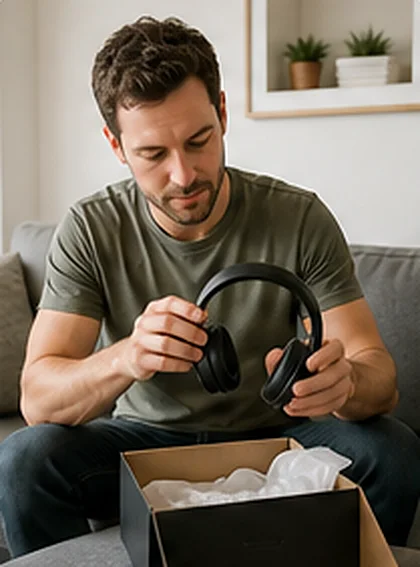
The creator opens the package and reacts in real time. It suits products with good packaging, gift-worthy items and subscription boxes. The format borrows the curiosity of a reveal, so the hook should promise something worth seeing.
Hook patterns to adapt.
- "Let me show you what came in the box."
- "I ordered this so you do not have to guess."
- "First time trying this, and I am filming the whole thing."
Beats. The sealed box, the reveal, the first reaction, a quick look at each item, a first use, and the verdict. Shots to request. Hands opening the package from above, a close-up of each item, the first use, and the creator's face during the reaction. For marketplaces, our guide to UGC for Amazon explains how unboxing footage fits a product listing.
Comparison with the old way
The creator shows the usual method or product next to yours and explains the difference. Never name a competitor or show their branding. Compare with the old way of doing things, such as a generic alternative or a manual method. It is honest, specific and easy for the viewer to follow.
Hook patterns to adapt.
- "Here is why I stopped doing it the old way."
- "Left is what I used to use, right is what I use now."
- "If you still do this by hand, you need to see this."
Beats. The old way and its pain, the switch, the new way in action, the specific difference in time, effort or result, and the offer. Shots to request. A split-screen setup or two matched clips, close-ups of the key difference, and the creator's reaction.
Hook stacks and fast variants
Once you have a body that works, the fastest test is a hook stack. Film several openings, each only a few seconds long, and cut them onto the same body. Pattern types to rotate include a question, a bold statement, a visual surprise, a direct callout of the audience and a result shown first.
- A question the viewer wants answered, such as "Why does this keep happening?"
- A direct callout, such as "If you run a small online store, this is for you."
- A visual surprise in the first frame, with on-screen text explaining it.
- A result first, then the story of how it happened.
- A contrarian statement, such as "Everything you were told about this is backwards."
UgcProduction writes AI hook sets from your brief and lets you produce edit variants with hook swaps, captions and crops in 9:16, 4:5, 1:1 and 16:9. Paid plans also include AI avatar videos, 5 per month on Growth, 25 on Scale and a custom limit on Enterprise. See AI UGC for how those fit next to creator footage.
Turning these examples into tested ads
An example is only a starting point. What works in one category may fall flat in another, so treat each format as a hypothesis. Launch a few formats side by side, tag every ad by hook, creator and format, and let the results tell you which structure to brief more of. Creatives tend to fatigue within weeks, so keep the next round in production while the current one runs.
UgcProduction connects read-only to Meta and TikTok ad accounts on Growth and higher plans and reports which hooks and creators win, so the next brief starts from evidence. Read more on UGC creatives, compare plans on UGC pricing, or plan a brief now with the demo on the homepage.